


As parents and grandparents look for ways to help children build a strong financial future, they're often met with a variety of account options, each designed with different goals in mind.
Whether you're saving for education, teaching a child about investing, building long-term retirement savings, or taking advantage of newer opportunities available to young savers, understanding the differences between these account types can help you make more informed decisions.
Smart Ways to Invest for Your Kids
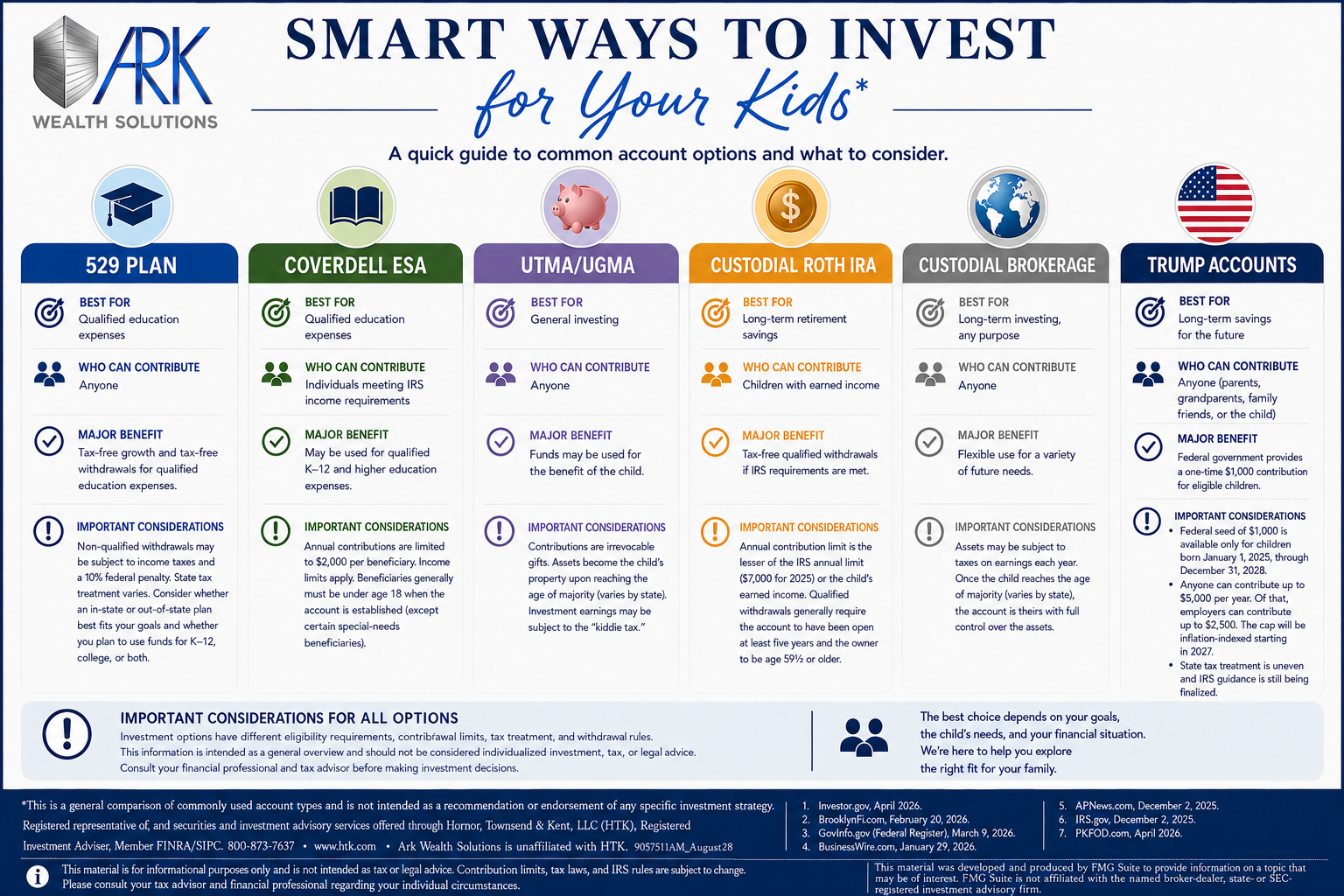
Education-Focused Options
For families whose primary goal is funding future education expenses, two common choices are the 529 Plan and the Coverdell Education Savings Account (ESA).
A 529 Plan offers tax-advantaged growth and tax-free withdrawals when funds are used for qualified education expenses. Many families appreciate the flexibility and higher contribution potential compared to other education-focused accounts.
Coverdell ESAs can also provide tax-advantaged growth for education expenses and may allow for a broader range of qualified elementary and secondary school expenses. However, contribution limits and income restrictions may apply.
Flexible Investment Accounts
Some families prefer to invest assets that can be used for a variety of future needs, not just education.
UTMA and UGMA accounts allow assets to be held on behalf of a child until they reach the age of majority. These accounts offer flexibility because funds can typically be used for the benefit of the child, regardless of whether those needs involve college expenses.
One important consideration is that investment earnings in these accounts may be subject to taxation, including rules commonly referred to as the "kiddie tax”. Because tax situations vary, families should consult with a qualified tax advisor regarding how these rules may apply to their circumstances.
Similarly, Custodial Brokerage Accounts allow long-term investing with broad flexibility, though investment earnings may be taxable and account ownership eventually transfers to the child upon reaching the applicable age.
Why Many Advisors Like Custodial Roth IRAs
One of the most powerful, yet often overlooked, savings opportunities for young people is the Custodial Roth IRA.
Unlike many other children's accounts, a Custodial Roth IRA requires the child to have earned income. Contributions are generally limited to the child's earned income for the year and applicable IRS contribution limits.
For young workers, whether from a summer job, part-time employment, or other qualifying earned income, a Custodial Roth IRA can provide a unique opportunity to begin saving for retirement decades before most people start thinking about it.
The potential advantage comes from time. Even relatively modest contributions made during a child's teenage years may have many decades to benefit from compound growth.
Additionally, qualified withdrawals may be tax-free if IRS requirements are met, making the Roth IRA an attractive option for long-term retirement savings.
A New Option: Trump Accounts
Families may also hear about Trump Accounts, a newer savings vehicle highlighted in recent discussions around children's financial planning.
According to the information summarized in our comparison guide, eligible children may receive a one-time federal contribution, and family members may have the ability to make additional contributions, subject to applicable rules and limits.
According to the information summarized in our comparison guide, eligible children may receive a one-time federal contribution, and family members may have the ability to make additional contributions, subject to applicable rules and limits.
Which Account Is Right for Your Child?
The answer depends on what you're trying to accomplish.
If your goal is primarily education funding, a 529 Plan or Coverdell ESA may be worth considering.
If flexibility is most important, UTMA/UGMA or custodial brokerage accounts may offer broader uses for the assets.
If your child has earned income and you're focused on long-term wealth building, a Custodial Roth IRA can be an especially compelling option.
And for families exploring newer opportunities, Trump Accounts may provide another option to consider as guidance continues to develop.
The Bottom Line
There is no one-size-fits-all solution when it comes to investing for children. The most effective strategy often begins with a clear understanding of your goals and the account types available to help achieve them.
At Ark Wealth Solutions, we help families evaluate the advantages, limitations, and long-term implications of different savings and investment vehicles so they can make confident decisions for the next generation.
If you'd like to discuss which approach may make the most sense for your family, we're happy to help. You can book a meeting with by clicking here.